Categories
Cambridge Colleges & Schools

Clare Hall

Founded in 1966, Clare Hall is one of the University of Cambridge’s youngest colleges, established as a sister institution to Clare College. Its primary focus is on graduate study, making it unique within the university as a dedicated centre for advanced research and scholarship.

Clare Hall was created to foster interdisciplinary collaboration and provide a supportive environment for graduate students, visiting academics, and postdoctoral researchers from all over the world.

What makes Clare Hall special is its strong emphasis on creating an informal, egalitarian academic community. The absence of rigid hierarchies—such as those between fellows and students—encourages open dialogue and a collaborative spirit. This collegial atmosphere is further enhanced by the college’s small size, which allows for close interactions and intellectual exchange among its members. With a global outlook and a vibrant community of international scholars, Clare Hall is known for promoting diversity, inclusivity, and innovation in research.

Architecture and Grounds

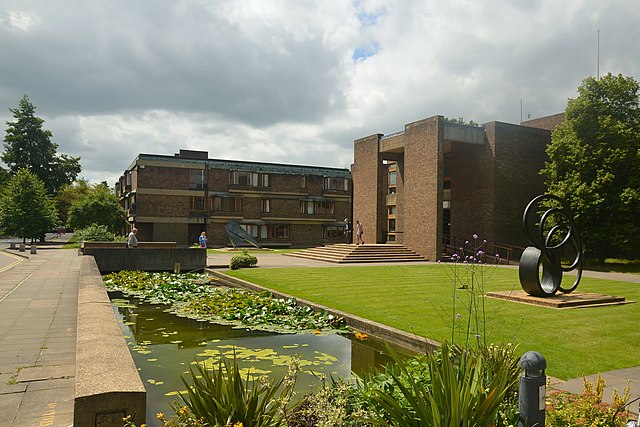
Clare Hall’s architecture reflects its modern origins, with buildings designed to promote both communal and private study. The college’s main structures were designed by Sir Leslie Martin, blending contemporary and functional architectural elements with a sense of openness. The architecture is characterised by clean lines, expansive glass windows, and an emphasis on natural light, creating an atmosphere conducive to scholarly work and reflection.

The college is located on Herschel Road, slightly west of the city centre, in a quiet, residential area. Clare Hall’s grounds are compact but beautifully maintained, offering peaceful gardens and open spaces for relaxation. Unlike the historic grandeur of older Cambridge colleges, Clare Hall’s modern architecture and tranquil setting offer a calm, reflective environment that supports focused academic work.

Notable Alumni

Clare Hall has attracted numerous distinguished academics and intellectuals from a variety of fields, thanks to its focus on graduate study and research. One of its most notable former members is Sir Martin Rees, a leading astrophysicist and former President of the Royal Society, who was a visiting fellow at the college. The renowned physicist Stephen Hawking also had connections with Clare Hall, attending events and fostering collaborations with scholars there.

The college is proud of its strong international ties, welcoming visiting academics and researchers from prestigious universities and institutions worldwide, creating a dynamic and globally connected academic environment. Clare Hall’s alumni continue to make significant contributions to academia, science, and the arts.

Visiting Clare Hall

Clare Hall is located on Herschel Road, to the west of the main university area, and is slightly off the usual tourist track. As a graduate college, it is smaller and less frequently visited by the public compared to the more centrally located undergraduate colleges.

Visitors interested in exploring Clare Hall should check in advance, as access is sometimes restricted due to its academic focus. The college is known for its peaceful, welcoming atmosphere, and during open days or by special arrangement, visitors may have the opportunity to explore its gardens and contemporary architecture. Given its location near the university’s West Cambridge site, Clare Hall is a pleasant stop for those seeking a quiet, reflective experience away from the busier parts of the city.

Categories
Cambridge Colleges & Schools

Clare College

Founded in 1326, Clare College is the second-oldest college at the University of Cambridge and boasts a rich history that spans nearly 700 years. Originally established as University Hall, it was re-endowed by Lady Elizabeth de Clare 🔗 in 1338, from whom it takes its name. 

The college has a strong reputation for its academic excellence, supportive community, and vibrant social life, which includes its famous May Ball—an annual highlight in the Cambridge social calendar.

One of Clare’s most notable features is its picturesque location on the River Cam, offering stunning views and access to the iconic Clare Bridge, the oldest surviving bridge over the river. The college is renowned for its beautiful gardens and tranquil courtyards, which provide a peaceful retreat from the busy streets of Cambridge. Clare’s commitment to fostering both academic and personal growth is evident in its warm, inclusive environment, making it a sought-after destination for students from a wide range of disciplines.

Architecture and Grounds

Clare College is celebrated for its beautiful architecture, which seamlessly blends medieval and classical styles. For instance, if you’re visiting, locate these two essential places:

The Old Court, built between 1638 and 1715, is a prime example of English Baroque architecture and is considered one of the most elegant college courtyards in Cambridge. The stonework, arches, and classical symmetry evoke a sense of timeless grandeur.

Another architectural gem is Clare Bridge, constructed in 1640, which connects the college to its expansive gardens and the iconic Backs along the River Cam. The college grounds are meticulously landscaped, with lush lawns, flower beds, and a stunning Fellows’ Garden.

The grounds extend to the riverside, providing some of the most spectacular views in Cambridge, particularly in spring and summer when the gardens are in full bloom. Clare’s commitment to preserving both its architectural heritage and its green spaces makes it one of the most visually striking colleges in the city.

Notable Alumni

Clare College has produced a wealth of notable alumni, making its mark in fields as diverse as politics, literature, and the arts. In politics, Sir David Attenborough 🔗, the celebrated naturalist and broadcaster, studied at Clare, as did James Mason 🔗, the famous British actor. The college’s commitment to fostering academic excellence is also evident in its former students who have gone on to make significant contributions to academia, such as Sir Eric Ashby 🔗, a distinguished biologist, and the historian Lord Thomas of Swynnerton 🔗.

In the literary world, Clare College is proud to count the Nobel Prize-winning poet Seamus Heaney 🔗 among its alumni, as well as the novelist John Fuller 🔗. These illustrious figures reflect Clare’s longstanding tradition of nurturing creativity and intellectual achievement.

Visiting Clare College

Clare College is centrally located in Cambridge, just off King’s Parade and within easy walking distance of many of the city’s most famous landmarks. Visitors are welcome to explore the college grounds, with its beautifully preserved courtyards and gardens, though some areas may be restricted during term time.

The college is open to the public throughout the year, and visitors can stroll through Old Court, view Clare Bridge, and wander the riverside gardens. It’s a particularly popular destination for those wishing to enjoy a peaceful walk along the Backs. Entry to the college is generally free, although visitors are advised to check opening times in advance, particularly if hoping to attend special events or exhibitions.

Categories
Cambridge Colleges & Schools

Churchill College

Churchill College was founded in 1960 in honour of Sir Winston Churchill. A key figure in British history, Churchill envisioned a new kind of institution that would bridge tradition with modernity, emphasizing scientific and technological advancements. The college was established with a clear purpose: to nurture talent in science and engineering, reflecting Sir Winston Churchill’s vision for Britain’s future.

However, it is also home to a vibrant humanities community, ensuring a balanced and multidisciplinary academic atmosphere. What sets Churchill College apart is its modernist architectural style and the spacious, green grounds that differentiate it from the traditional, more enclosed colleges of Cambridge. As the National and Commonwealth Memorial to Winston Churchill, it houses an archive of his papers, contributing to its reputation as a key research centre for 20th-century history and politics.

With a focus on excellence in STEM fields, Churchill College maintains its commitment to offering a unique, inclusive educational experience. Despite its youth, it is a forward-thinking and ambitious college that fosters innovation, research, and diversity among its students and staff.

Architecture and Grounds

The architecture of Churchill College is notably different from many of Cambridge’s older, Gothic or Classical buildings. Designed by the renowned architect Richard Sheppard, the college’s style is a modernist one, defined by its bold, clean lines and use of concrete and glass. It stands out for its functional yet striking design, where simplicity meets innovation. The grounds are sprawling, covering 42 acres of land, giving the college a spacious and open atmosphere with plenty of green lawns and trees. Its large playing fields and tranquil gardens create an environment conducive to both academic study and recreation.

The college’s architecture may not echo the traditional grandeur of older Cambridge institutions, but it represents a break from the past, embracing the forward-looking, contemporary spirit that Sir Winston Churchill championed. The Møller Centre, a world-class executive education center within the grounds, is another architectural landmark that demonstrates the college’s commitment to both education and professional development.

Notable Alumni

Despite being relatively young, Churchill College boasts a long list of distinguished alumni who have made significant contributions in various fields. Its strong emphasis on science and engineering has produced notable figures such as Sir Tim Berners-Lee, the inventor of the World Wide Web, and Dr. Martin Rees, a former Astronomer Royal and one of the world’s leading astrophysicists. In the humanities, Churchill has also nurtured influential thinkers like Professor Mary Beard, a renowned classicist and public intellectual.

In addition, the college has produced numerous political leaders, including former UK Conservative Party leader Iain Duncan Smith. These notable figures highlight the college’s strong academic reputation and its ability to develop world-leading talent across disciplines.

Visiting Churchill College

Churchill College is located slightly northwest of Cambridge city center, on Storey’s Way. While it’s a bit further from the historic core of the university, it’s easily accessible on foot or by bicycle, offering visitors a peaceful escape from the busier parts of Cambridge. The college is open to visitors year-round, though certain parts, such as the Churchill Archives Centre, may require advance permission or booking.

When visiting, take time to explore the extensive grounds and marvel at the modernist architecture that sets the college apart. You can also learn more about its history by visiting the various exhibits, including those dedicated to Sir Winston Churchill. Keep an eye out for special events, lectures, or open days that provide deeper insight into the college’s academic and cultural life.

Categories
Cambridge Colleges & Schools

Christ’s College

Christ’s College was originally founded as “God’s House” in 1437 by William Byngham, a London parish priest, for the purpose of training grammar schoolmasters. In 1505, Lady Margaret Beaufort, the mother of King Henry VII, refounded it as Christ’s College.

The college’s motto, “Souvent me souvient,” is French for “Often I remember,” reflecting its long history and the importance of memory and tradition in its identity.

Christ’s College has a strong academic reputation within the University of Cambridge. It consistently ranks high in the Tompkins Table, an annual ranking of Cambridge colleges based on undergraduate exam results.

Architecture and Grounds

The college features a blend of architectural styles, with buildings dating from the 15th century to the present day. The main entrance, known as the Great Gate, is a striking example of Tudor architecture, adorned with the arms of Lady Margaret Beaufort.

The First Court, the oldest part of the college, is beautifully preserved and includes the Master’s Lodge, where the head of the college resides. The Fellow’s Garden is a highlight of the college, known for its serene atmosphere, lovely planting, and the famous “Milton’s Mulberry Tree,” believed to have been planted by the poet John Milton, one of the college’s most illustrious alumni.

Notable Alumni

  • John Milton: The famous 17th-century poet and intellectual, known for works such as “Paradise Lost,” was a student at Christ’s College. His legacy is commemorated in the college with a statue in the grounds and a mulberry tree said to have been planted by him.
  • Charles Darwin: The naturalist and biologist who formulated the theory of evolution by natural selection, also attended Christ’s College. His time at the college was instrumental in shaping his ideas that later revolutionized biology and our understanding of life on Earth.
  • Sir John Finch: A notable 17th-century physician and diplomat, who became the Ambassador of the English court to the Ottoman Empire.

Visiting Christ's College

Visitors are welcome to explore certain parts of the college, such as the First Court and the gardens, during designated hours. The tranquil atmosphere and historic surroundings make it a popular spot for both tourists and those interested in Cambridge’s academic heritage.